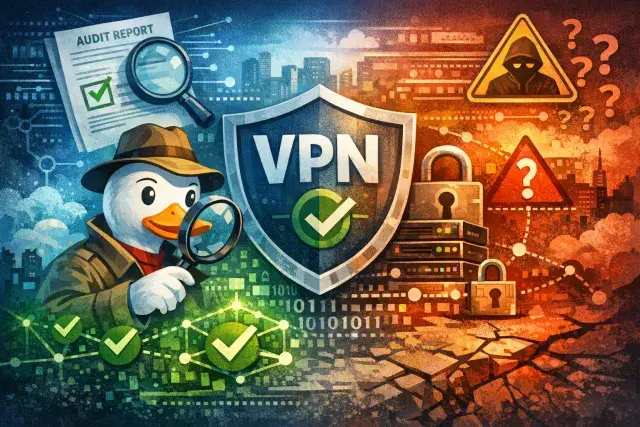
Every unencrypted connection made from a coffee shop or hotel lobby is an open door. As distributed work has become a permanent feature of business operations rather than a temporary accommodation, the security infrastructure supporting remote employees has struggled to keep pace. A business-grade VPN - a virtual private network that encrypts traffic between a device and a company's servers - has moved from optional IT expense to baseline protection for organizations of any size.
Why Public Networks Remain a Genuine Threat
Public Wi-Fi networks at airports, cafes, and co-working spaces are, by design, open. Traffic on these networks can be intercepted through techniques that require no sophisticated equipment - a motivated attacker with modest technical knowledge can capture unencrypted data passing through a shared network. For employees accessing company files, client records, or internal communication platforms, that exposure is not theoretical.
The risk compounds when workers connect to multiple networks across a single day - a home router in the morning, a client's guest network midafternoon, a public hotspot between meetings. Each transition represents a potential gap. A VPN closes that gap by wrapping all outbound and inbound traffic in an encrypted tunnel, making intercepted data unreadable without the corresponding decryption key.
Consumer Tools Versus Business-Grade Solutions
Not all VPNs serve the same purpose, and the distinction matters. Consumer VPNs are designed primarily for privacy browsing and streaming access. Business VPNs address a different set of requirements: centralized account management, simultaneous connections across an entire workforce, audit logs, policy enforcement, and in more advanced configurations, integration with Zero Trust architecture.
Zero Trust is not a product - it is a security model built on the principle that no user or device is automatically trusted, even if already inside a corporate network. Enterprise VPN platforms increasingly incorporate Zero Trust controls, requiring continuous authentication and restricting access to only the specific resources each user needs. For small businesses, this level of infrastructure is rarely necessary. For organizations handling sensitive financial, medical, or legal data, it may be essential.
The pricing gap between these tiers is substantial. Lightweight business VPN subscriptions can cost just a few dollars per user per month. Full enterprise deployments with dedicated infrastructure, compliance tooling, and identity management integrations run significantly higher - sometimes into hundreds of dollars per user annually. Identifying which tier matches actual operational risk, rather than defaulting to either extreme, is where most procurement decisions go wrong.
What to Evaluate Before Committing to a Provider
Several criteria separate a well-matched VPN from one that creates friction without meaningfully improving security:
- Connection limits: Business plans should cover every device used by every employee, not impose per-seat caps that push users toward workarounds.
- Protocol quality: Modern protocols such as WireGuard and OpenVPN offer strong encryption with lower latency than older alternatives. Providers relying on outdated protocols deserve scrutiny.
- Kill switch functionality: If the VPN connection drops, a kill switch cuts internet access entirely rather than allowing unprotected traffic to transmit. This is non-negotiable for business use.
- No-log policy: A credible provider does not store records of user activity or connection metadata. Independent audits of this claim are worth verifying.
- Centralized administration: IT teams need to manage accounts, enforce policies, and onboard or offboard users without contacting the provider for each change.
Surfshark as a Small-Business Starting Point
Among current options reviewed for small and mid-sized businesses, Surfshark stands out on the value-to-functionality ratio. Its pricing puts robust VPN protection within reach for organizations that cannot justify enterprise-tier spend, while its feature set - including the WireGuard protocol, a verified no-log policy, and unlimited simultaneous connections - addresses the core requirements of a distributed workforce.
Unlimited connections are a particularly practical detail for small businesses. Most competitors impose per-seat limits, which means adding a new employee or a second device triggers additional cost. Surfshark's model eliminates that friction. For a business where headcount is fluid or where employees routinely work across multiple devices, this matters in ways that raw pricing per month does not fully capture.
The broader point is that selecting a VPN is not a one-time decision made purely on cost. As workforce distribution becomes the norm and data privacy regulations tighten across multiple jurisdictions, the security infrastructure protecting remote connections will require periodic reassessment. Starting with a provider that scales without punishing growth is the more defensible position for any organization whose staff has no intention of returning to a single office full-time.