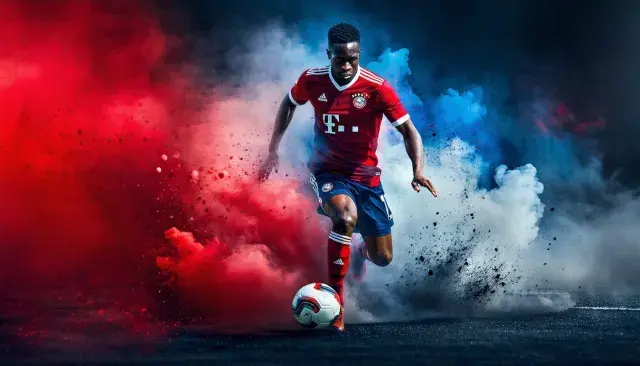

One of the most extraordinary European club fixtures in recent memory has a sequel. After a first-leg encounter between Bayern Munich and Paris Saint-Germain that produced nine goals and left viewers across the continent in disbelief, the second leg takes place at the Allianz Arena on May 6, kicking off at 3 p.m. ET. PSG hold a 5-4 advantage heading into Munich, with a place in the final at the Puskás Aréna in Budapest - against Arsenal - on the line.
Why This Fixture Has Captured a Global Audience
The appeal of this encounter extends well beyond the scoreline from the first leg. Both clubs represent distinct footballing philosophies that have evolved significantly over the past decade. Bayern Munich have long embodied an industrial consistency - a high-pressing, positionally disciplined system built on domestic dominance and periodic European ambition. PSG, meanwhile, have spent years assembling a star-laden roster in pursuit of the one prize that has eluded them, reshaping their identity along the way from Ligue 1 powerhouse to genuine continental contenders.
What makes this particular edition of the fixture so compelling is how both sides have shifted toward a more dynamic, youth-inflected identity. The kind of individual brilliance that drove the first leg - personified by performers like Michael Olise and Khvicha Kvaratskhelia - reflects a broader trend in elite European club football toward technical versatility and high-tempo attacking expression. These are not purely physical or tactical contests anymore; they are exercises in controlled chaos, where creative individuals are given the framework to decide outcomes.
The Tactical Weight of a One-Goal Deficit
A single-goal deficit is simultaneously manageable and precarious. For Bayern, it demands a proactive approach from the opening minutes - passive play risks the kind of away goal that extinguishes home advantage entirely. But aggression carries its own costs. Leaving space behind a high defensive line against the kind of forward movement PSG demonstrated in the first leg invites rapid transitions that can be ruthlessly punished.
For PSG, the calculus is simpler in principle but demanding in execution. Protecting a lead without retreating entirely - staying dangerous enough to deter Bayern from committing wholesale - requires a level of collective discipline that is genuinely difficult to sustain for ninety minutes at this altitude of competition. One lapse in concentration, and the tie is level. Two, and Bayern are through.
This is the tension that makes second legs in knockout European competition among the most psychologically complex events in professional sport - a chess match played at full sprint, where momentum can shift entirely on a single decision.
How to Watch the Second Leg for Free
For viewers outside of traditional broadcast markets, access to live coverage of this fixture is more straightforward than it may appear. RTÉ Player, the Irish public broadcasting service's free streaming platform, carries live coverage of the fixture at no cost to users. The platform is geo-restricted to Ireland, but this limitation can be circumvented using a VPN - a virtual private network - which masks a user's actual location and routes their connection through a server in a selected country.
The process is uncomplicated:
- Subscribe to a reputable VPN service such as ExpressVPN
- Download the application on your preferred device - apps are available for Windows, Mac, iOS, Android, and Linux
- Connect to a server located in Ireland
- Access RTÉ Player and stream the fixture without charge
ExpressVPN is a reliable choice for this purpose. It maintains servers across more than 100 countries, including Ireland, and applies a strict no-logging policy - meaning user activity is not stored or tracked. Connection speeds are consistent enough for uninterrupted HD streaming, and up to ten devices can operate simultaneously under a single subscription.
A two-year subscription is currently available for $68.40, reduced from its standard rate - a discount that includes four additional months at no extra cost and a 30-day money-back guarantee. A one-month plan is also available at $12.99. For users who wish to test the service before committing, the money-back guarantee effectively allows free access for the duration of this fixture window and the remainder of the European club calendar.